📌 Holi Festival 2026: Essential Info
- 📅 Dates: March 4, 2026 (celebrations March 2-5)
- 📍 Best Location: Vrindavan, Banke Bihari Temple
- 🎨 What to bring: White clothes, protective goggles, camera covers
- 📸 Photography tips: Use UV filters and morning light (7-9 AM – 4-6 PM)
- 🚫 Avoid: Alcohol (prohibited in sacred cities)
Discover the true spirit of Holi in Vrindavan’s sacred lanes! Stories, traditions, and practical tips for experiencing India’s most magical festival of colors.
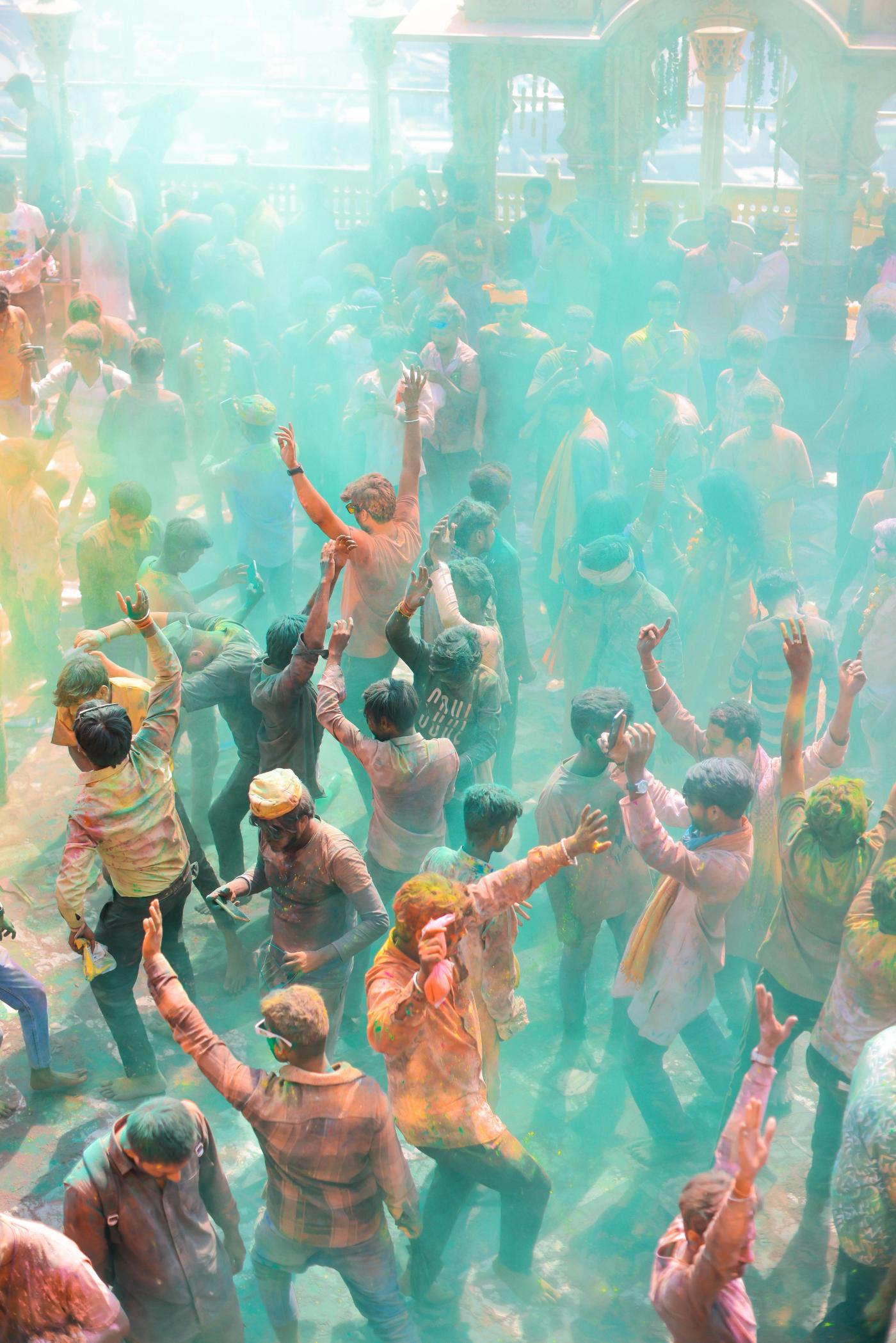
Imagine a world where the air dances. Clouds of saffron-red, sunlit yellow, and emerald green engulf everything as contagious laughter merges with rhythmic music. This is Holi—the festival that transforms India into a living Van Gogh canvas, celebrating spring, light’s triumph over darkness, and the eternal love between Krishna and Radha.
But one place embodies its magic perfectly: Vrindavan and Mathura, the sacred stage of Krishna’s divine adventures. Here, amid incense-soaked alleyways and ancient temples, I lived two dreamlike days, camera in hand and heart open, surrendering to this ancestral ritual.
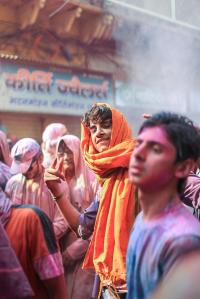
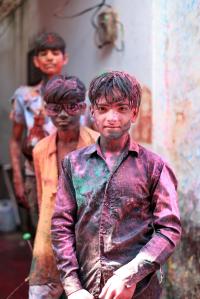
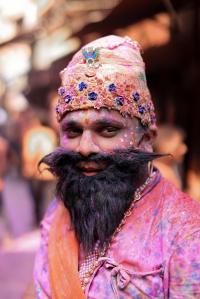
From dawn’s first light, when devotees begin chanting in temple courtyards, to the wild afternoons where squares become stages of joyful chaos, every moment immerses you in an India found nowhere else. As the sun sets, staining clothes in unrecognizable shades of purple, green, and gold, you realize Holi isn’t just a festival—it’s a soul-stirring experience.
Origins & Meaning: Myth and Tradition
Holi’s roots lie in two Hindu legends:
1. The Legend of Prahlad and Holika
In ancient India, the demon king Hiranyakashipu—granted near-invincibility by Brahma—demanded worship as a god. But his son Prahlad remained devoted to Vishnu. Enraged, the king ordered his fireproof sister Holika to burn Prahlad alive. As flames rose, divine winds wrapped Holika’s protective cloak around Prahlad instead, reducing her to ashes while he emerged unharmed.
Today, Holika Dahan bonfires on Holi’s eve symbolize this victory of good over evil. When the embers fade, the world explodes in color—proof that the darkest night always yields the brightest dawn.
2. Krishna and Radha’s Colorful Play
The story of Holi is forever intertwined with Krishna. In Vrindavan, where the breeze carries the scent of kadamba blossoms, young Krishna—his face as blue as a summer storm—would play joyfully with his beloved Radha through the fields. Yet one thought troubled him: “Why am I so dark, while Radha glows like the moon?”
With childlike innocence, he confessed to his mother Yashoda: “Radha is so beautiful, and I…” The wise woman smiled and suggested: “If color troubles you, why not change it?”
And so Krishna, with the cleverness only a divine child could possess, took handfuls of colored powder and began playfully smearing Radha’s face. Laughing wildly, they chased each other through flower-strewn meadows, tossing clouds of red, yellow and green into the air—transforming their differences into a rainbow of shared joy.
When a handful of violet powder struck Radha’s cheek, her laughter shook the petals from the trees. Krishna, now splashed in pink and orange, danced to the rhythm of that happiness. In that moment, they understood: the colors didn’t conceal, but revealed love’s true essence—pure, playful and without boundaries.
To this day, when Holi’s skies fill with colored powders, that magic repeats itself: every hue that touches our skin becomes a divine kiss, reminding us that in true love, all differences become cause for celebration.
And if you look closely through the laughing crowds, you might glimpse two figures dancing—he dark as midnight, she bright as moonlight—still entwined in love after five thousand years.
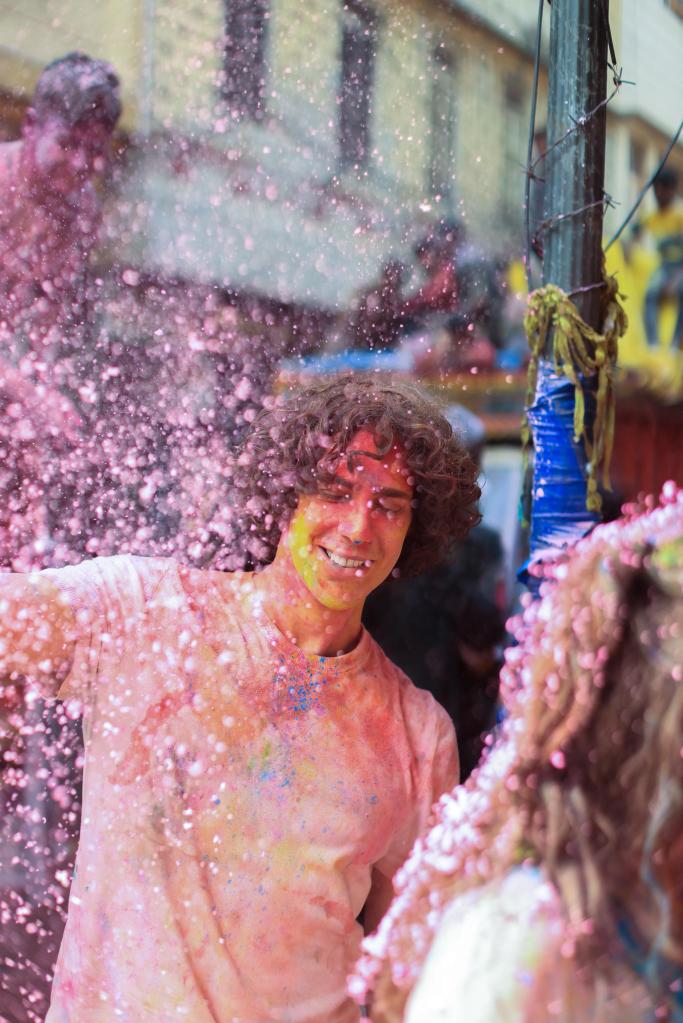
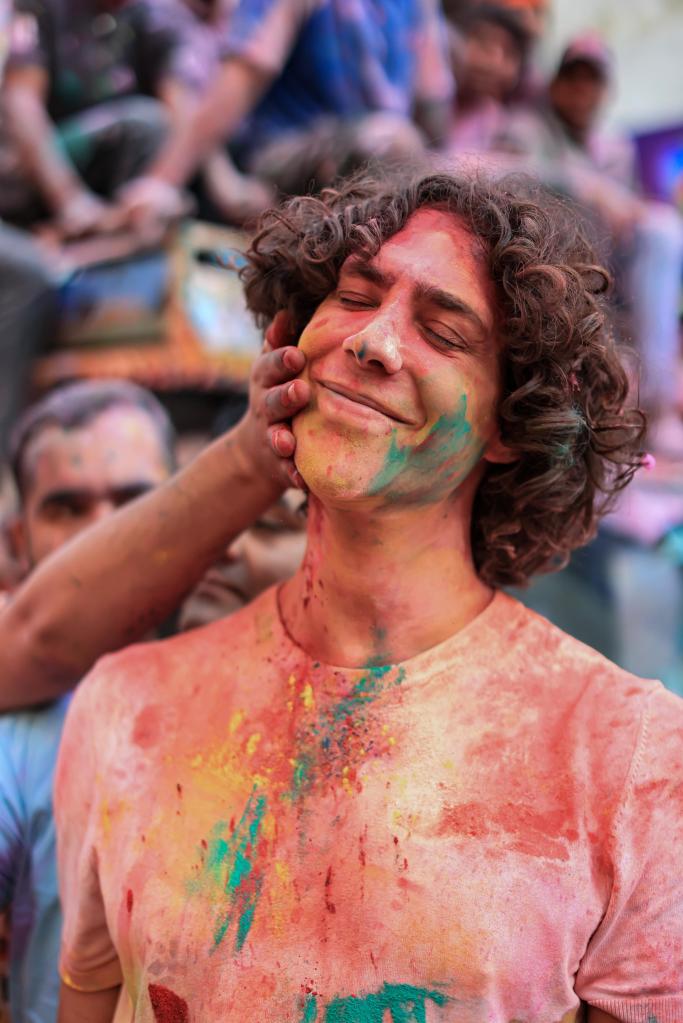
Where to live Holi Festival? Why Vrindavan is so unique?
While Holi in most Indian cities is a vibrant, one-day celebration of joyful chaos, Vrindavan offers something different: a unique blend of devotion, tradition, and pure ecstasy. Here, Holi unfolds over an entire week, with festivities beginning even before the official date.
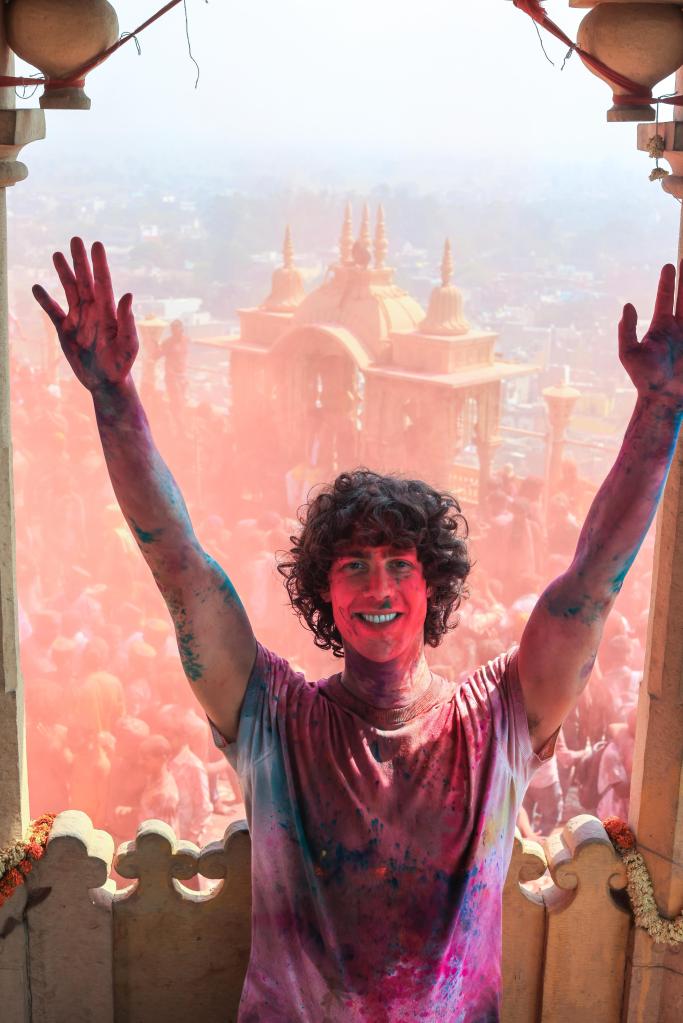
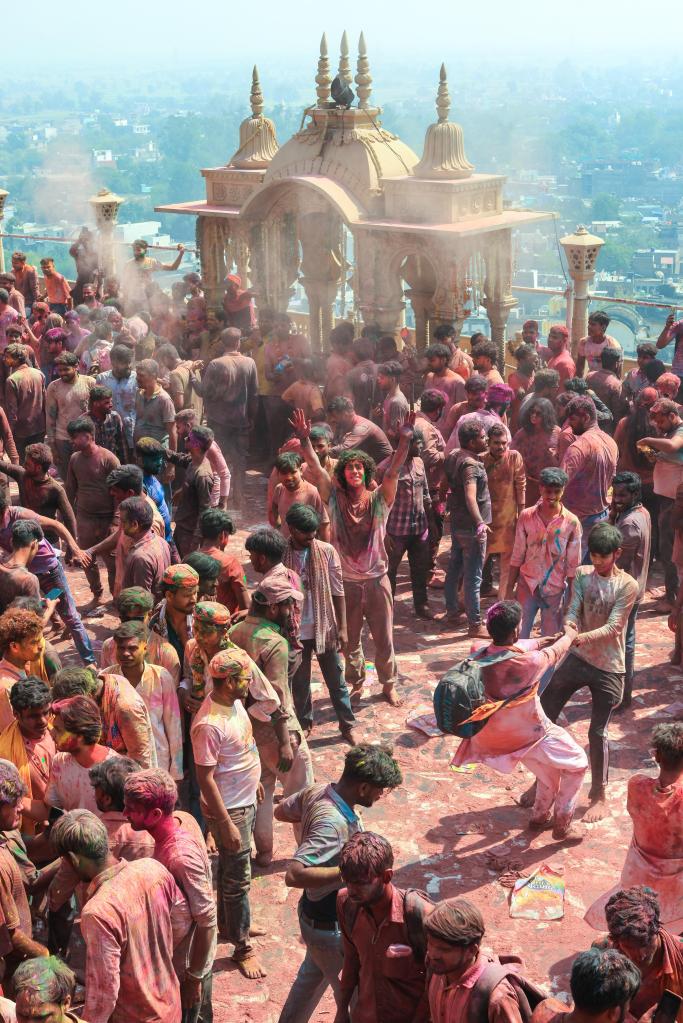
The most thrilling moment? The celebrations at Banke Bihari Temple, where crowds gather to throw colored powders and flowers as devotional songs fill the air. It’s an intense, almost mystical experience—one that makes you feel part of something far greater than yourself.
2026 Travel Tips
Stay: Radisson Vrindavan (clean, vegan food only—alcohol is banned).
Arrive early for the main event (March 4) and Dhulandi (March 3).
Wear: Old white clothes (they’ll stay dyed!), bandanas, and sunglasses.
Camera gear: Use dustproof covers and polarizing filters. Morning light is ideal for photos.
My Vrindavan Holi Experience: divine chaos, emotions and colors
I still remember the moment I stepped into Banke Bihari Temple – a whirlwind of pink, yellow and green powder, the heady scent of flowers, ecstatic cries of “Holi Hai!”, and music that seemed to echo from another realm. I joined the dancing crowd, surrendering to the colors as devotees sang hymns to Krishna. This is Vrindavan’s Holi: where devotion and celebration merge, where strangers’ color-stained hands caress your face in gestures of divine love.
An Adventure to Experience at Least Once in a Lifetime
Holi in Vrindavan isn’t just a festival. It’s total immersion into India’s heart. If you’re ready to get stained with happiness, this is your pilgrimage.


Leave a Reply